
News
Moonlighter Developer Delays ReVamp Playtest Over AI Cloning Fears, but Is It Worth the Trade-Off?
Moonlighter developer Digital Sun has delayed ReVamp's public Steam playtest over concerns about AI-assisted game cloning. With a smaller Discord test replacing the original plans, we examine whether protecting the game from potential copycats is worth sacrificing broader player feedback ahead of launch.
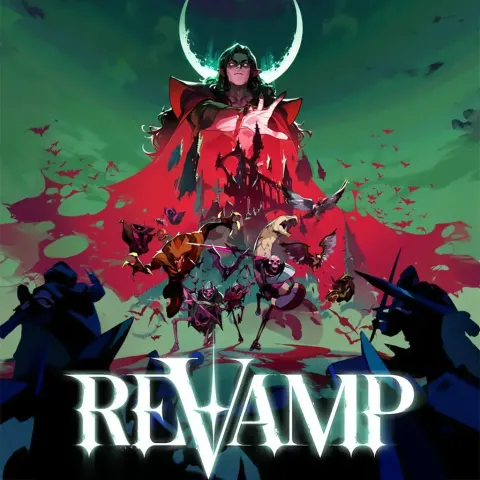


Developer Digital Sun, the studio behind Moonlighter and Cataclismo, has delayed the public Steam playtest for its upcoming game ReVamp over concerns that generative AI could be used to clone the game before it launches.
Originally scheduled to begin on October 29, the public test has been replaced with a smaller, controlled playtest through the studio's Discord community. Digital Sun is now aiming to open testing more widely in January 2027, just a couple of months before the game's planned March 25 release.
It's an understandable concern given how quickly AI-assisted development tools are evolving, but is delaying public testing actually going to protect the game?
What is ReVamp?
ReVamp is an upcoming gothic action-strategy game that Digital Sun describes as a "Tower Defensevania".
Players take control of Dracula, defending his castle against waves of invading heroes by building and rearranging rooms, positioning monsters and fighting enemies directly.
It combines tower defence, roguelite progression and action combat, with players strengthening their fortress and unlocking new abilities between sieges.
The game was recently showcased during the Triple-i Initiative presentation, where Digital Sun confirmed its March 2027 release date and invited players to sign up for the upcoming Steam playtest.
That invitation has now been scaled back.
Why has Digital Sun delayed the playtest?
In a statement published on October 19, Digital Sun explained that recent reports of games being reverse-engineered and recreated with AI-assisted development tools had caused the team to reconsider distributing a playable build so far ahead of release.
With potentially tens of thousands of people gaining access to the game, the studio believes the risks of releasing a public build currently outweigh the benefits.
Instead, testing will begin with a smaller group of players through Discord on October 29, with access gradually expanding.
The studio hopes to open the public playtest in January, although that date isn't guaranteed.
Digital Sun isn't the only developer concerned about this issue.
Alliance Arts recently withdrew the planned Steam Next Fest demo for Drunken Goddess Reflux, citing similar fears that AI-assisted imitators could recreate its presentation and gameplay before launch.
It's an emerging problem that developers are increasingly being forced to consider.
But there's a difference between acknowledging the threat and allowing it to dictate how a game is brought to market.
The game is already out there
Here's where I struggle with Digital Sun's decision.
ReVamp isn't an unannounced project being developed behind closed doors.
We've already seen gameplay trailers, screenshots, demonstrations of the castle-building mechanics and explanations of how its combat and progression systems work.
Anyone determined to create an AI-assisted imitation of ReVamp already has plenty of material to work from.
They can study the footage, examine the visuals, understand the general gameplay loop and start building something that resembles it.
Would access to the actual game make that process easier? Certainly.
A playable build exposes far more than a trailer ever could, particularly when it comes to combat behaviour, system interactions and potentially the game's underlying assets.
But someone looking to rush a cheap imitation to market doesn't necessarily need to recreate every system accurately. They only need enough of the concept to put together something recognisable.
And delaying the playtest doesn't make that existing information disappear.
An idea is not the finished game
Having spent time working in game development myself, this situation reminds me of a concern that comes up regularly among developers.
The fear that somebody will steal an idea before it has a chance to become a finished game.
It's not entirely unfounded. Copycat games have existed for decades, and generative AI is making some forms of rapid prototyping and imitation increasingly accessible.
But having an idea and actually delivering a good game are two very different things.
A game's quality comes from far more than its central concept.
It's the combat balancing, responsiveness, level design, progression, artwork, technical performance and countless smaller decisions that make the experience enjoyable.
AI might help somebody throw together an imitation of those systems more quickly, but that doesn't mean they can suddenly reproduce years of development and refinement.
Nor does producing a playable imitation guarantee that anyone will want to buy it.
There's still an enormous difference between something that looks like ReVamp and something that actually plays as well as Digital Sun intends.
What does delaying the playtest actually achieve?
This is the part of the decision I find most difficult to justify.
Public playtests are valuable because players do things developers don't expect.
They find bugs, exploit systems, discover balancing problems and test the game across a much wider range of hardware and playstyles.
They also help build an audience.
For an indie studio, getting a game into players' hands before launch can generate discussion, encourage wishlists and provide feedback that might otherwise arrive too late to address.
Digital Sun will still get some of those benefits from its smaller Discord test, and controlled testing is a perfectly reasonable development strategy.
But the smaller the testing audience, the narrower the range of experiences and hardware configurations represented in that feedback.
And with ReVamp launching in March, pushing the public playtest towards January leaves a shorter window to gather that broader feedback and act on it.
That's a tangible development trade-off being made in response to a threat whose likelihood and commercial impact are difficult to measure.
You can't control what other developers do
Ultimately, Digital Sun can control the quality of ReVamp, how it's tested and how prepared the game is for launch.
What it can't realistically control is whether another developer decides to copy its concept.
That could happen tomorrow using the trailers and screenshots already available. It could happen during a January playtest, or it could happen the day after ReVamp releases.
AI isn't going away, and neither is the possibility of somebody using it to imitate another developer's work.
I would rather see Digital Sun get ReVamp into players' hands, collect the data it needs and focus on delivering the strongest possible launch.
There are reasonable precautions a studio can take, including restricting unreleased content and limiting what's accessible in a test build.
But delaying access primarily because of what a hypothetical competitor might do feels like giving that competitor influence over your development process before they've even built anything.
None of this means Digital Sun's concerns should be dismissed. Developers deserve protection from those who deliberately exploit their work.
And if the studio believes a smaller test will give it everything it needs, that's ultimately its decision.
I just think the benefits of broader testing deserve more weight than the possibility of someone producing an imitation.
You can't stop somebody from trying to copy your game. But you can end up limiting your opportunities to make it better.
ReVamp is scheduled to launch on PC via Steam on March 25, 2027, with its first limited playtest beginning October 29.
Sources
- About the ReVamp playtest Digital Sun
Written and edited by It Runs Fine. Editorial policy · Report an error
Keep reading
News
Steam Is Finally Separating DLC Achievements, and Vampire Survivors Is Already on Board
Valve has introduced Steam Achievement Sets in beta, allowing developers to separate DLC achievements from base-game progress and preserve completed sets. Vampire Survivors developer poncle has already confirmed plans to adopt the system later this year.
News
Enshrouded 1.0 Is Finally Here, Bringing a Complete Embervale, New Biome and Major Gameplay Changes
Enshrouded has officially left Early Access, bringing the complete Embervale map, the new Cinder's Cradle biome, expanded combat, Sparkworks building tools and major performance improvements. Here's everything included in version 1.0, now available on PC and PlayStation 5.
News
Modern Warfare 4 Won't Launch on Xbox Game Pass
Activision has confirmed Call of Duty: Modern Warfare 4 won't launch on Xbox Game Pass when it releases on October 23. Australian players will need to purchase the game separately, with the Standard Edition priced at AU$109.95. Game Pass availability isn't planned until late 2027.