
ReviewUpdated
over the hill Review: A Beautiful Drive That Eventually Tests Your Patience
over the hill Reviewed on PC v1.0
What starts as a relaxing off-road adventure through beautiful landscapes gradually becomes an exercise in frustration. After 4.4 hours exploring over the hill, its unforgiving recovery mechanics and repetitive terrain left me wanting to park up for good.
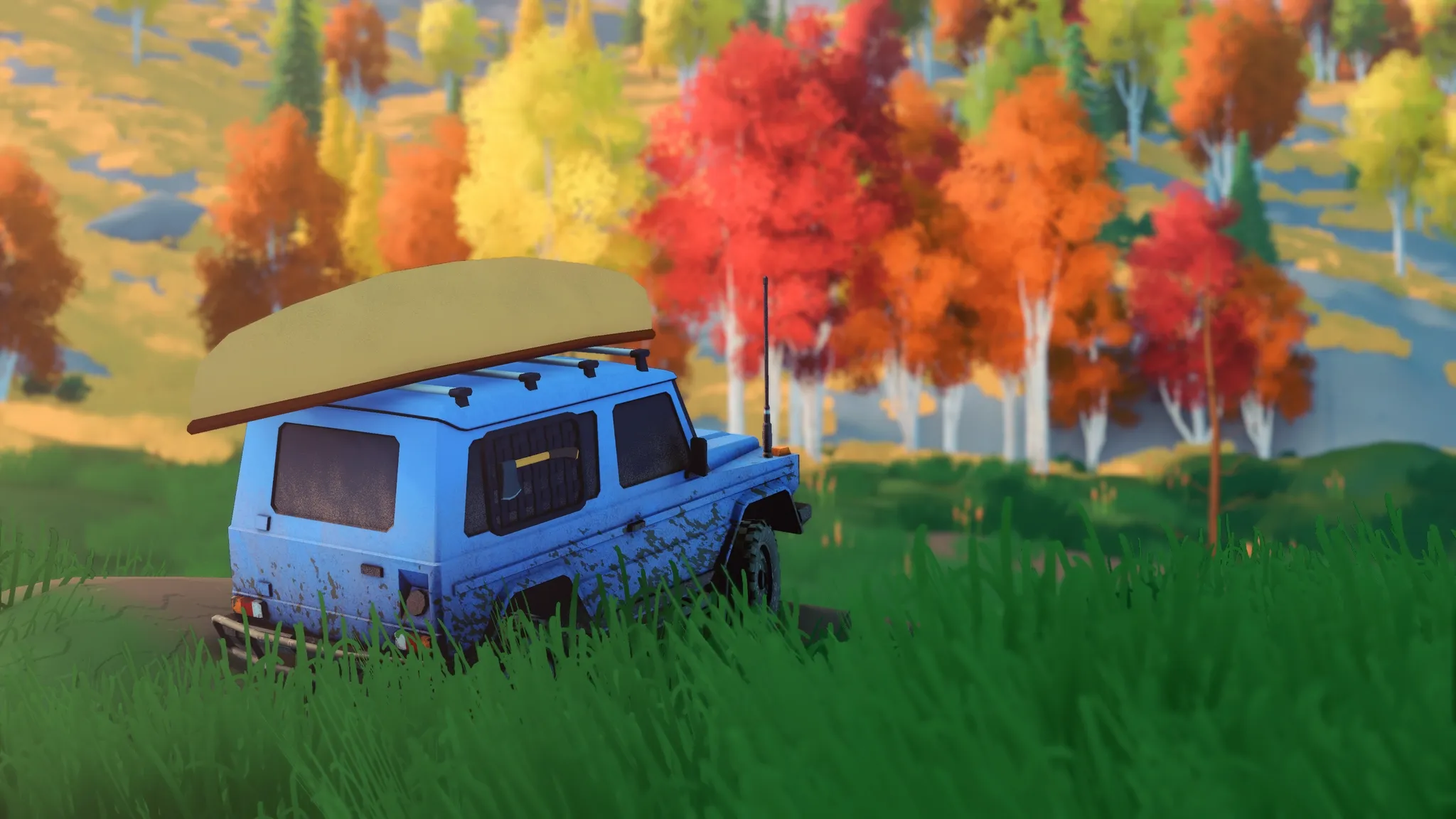

over the hill is a game I really wanted to love. For the first couple of hours, I thought I would.
It's a beautiful off-road adventure where the simple act of driving around, discovering new locations and working your way through difficult terrain can be genuinely satisfying. The weather is fantastic, the driving feels good, and there's something quite relaxing about taking an old 4x4 through the wilderness without much of a plan.
Unfortunately, the further I progressed, the more that enjoyment started to disappear.
What began as an enjoyable challenge gradually became a frustrating experience of getting bogged down, retracing long stretches of terrain and losing progress when recovery wasn't possible.
After 4.4 hours, I reached a point on the second map where I simply didn't want to continue playing solo.
That's a shame, because there's a lot here that I genuinely enjoyed.
A Promising Start
The driving in over the hill strikes a good balance between accessible and challenging.
It's not so unforgiving that you need to crawl through every section of terrain. There are plenty of opportunities to pick up speed and enjoy yourself, but there are also moments where slowing down, dropping into low gear and carefully picking your route makes all the difference.
I appreciated that balance early on. The game gives you room to experiment, and successfully navigating a difficult section of terrain feels rewarding.
Exploration is similarly enjoyable at first.
As you uncover parts of the map, question marks appear to indicate points of interest. These might lead to crates containing cosmetic items, scenic viewpoints or guided trails that take you through more demanding sections of the environment.
There's enough to discover that I regularly found myself heading off in a different direction just to see what was waiting for me.
You can also track your discoveries through the map legend, which keeps a record of collectibles, trails, lookouts and campsites.
One of the more useful discoveries is the cabin system. Once you've found a cabin, you can fast travel back to it from anywhere on the map. This makes returning for missed collectibles much easier, particularly when a crate is tucked away somewhere difficult to reach.
After just under two hours, I'd moved onto the second map without fully completing the first. I'd discovered all its cabins, but still had collectibles to return for.
I liked having the freedom to move forward without needing to tick every box.
It's the Little Details That Make the World
Visually, over the hill has a lovely atmosphere, but it's the smaller environmental details that really stood out to me.
One of my favourite moments came while driving through rain at night.
With visibility dropping, I switched on the headlights and continued making my way through the landscape. The gentle guitar soundtrack, combined with the sound of raindrops hitting the vehicle's fabric roof, made for a surprisingly immersive experience.
Even the reversing lights serve a practical purpose. They illuminate the terrain behind your vehicle, helping you see what you're reversing into.
It sounds minor, but these touches make the vehicles feel more connected to the environment.
The weather continues to impress in different areas. During a later trip into snowy terrain, I encountered thick snow fog that made headlights essential for seeing where I was going.
Traction was noticeably worse, too. Reaching a scenic viewpoint required considerably more effort, and I finally found myself relying on the winch rather than simply driving around obstacles.
The vehicles also leave visible tyre tracks in the terrain, another detail that helps sell the off-road experience.
Then there's the wildlife.
Initially, I assumed the animal sounds around me were just background ambience. That changed when I spotted a beaver and tried to photograph it.
I wasn't quick enough.
A little later, I managed to photograph a deer, earning an achievement in the process.
Now I had another reason to explore. I wanted to find that beaver again.
Those little distractions are where over the hill is at its best. You set out to do one thing, spot something interesting along the way and suddenly find yourself heading somewhere completely different.
The scenic viewpoints are particularly well presented, with the camera pulling away to reveal the surrounding landscape in a way that reminded me of synchronising viewpoints in Assassin's Creed.
As someone interested in how games are developed, I also found myself looking closely at the terrain. There are some familiar noise-like patterns in the landscape, with extensive vegetation and rock placement helping shape the environment. The guided trail sections feel more deliberately constructed.
Whatever combination of techniques has been used, the overall presentation works. It's a visually appealing world that encourages you to stop and appreciate your surroundings.
At least, until the terrain starts working against you.
When Difficult Terrain Stops Being Enjoyable
The second map was where my opinion started to change.
Compared with the first, it introduced considerably more muddy terrain, with cabins and other objectives seemingly spread much further apart.
Initially, I actually enjoyed the added challenge.
The mud forced me to think more carefully about where I was going. At one point, after taking a lengthy detour to reach a crate, I found myself weighing up whether it was quicker to backtrack through the mud or take a considerably longer journey across easier terrain before using fast travel.
That's good gameplay.
The shortest route shouldn't always be the best one, and I appreciated having to think about my surroundings rather than simply driving towards the next marker.
But there's a limit to how long that stays enjoyable.
As I continued exploring, the distances between objectives and the amount of muddy terrain started to wear on me.
I found myself repeatedly getting stuck in areas where I couldn't recover, forcing me to fast travel back to cabins a considerable distance away.
What had initially felt like a challenge started feeling like wasted time.
I even returned to the first map to visit the mechanic, hoping I could unlock more equipment to make the second map easier to navigate.
Unfortunately, I'd already unlocked everything available for my current vehicle.
There are other vehicles to unlock, but at that stage I hadn't found a compelling reason to switch. The differences between them weren't immediately obvious to me, and I was beginning to question what meaningful progression remained beyond exploring the maps and collecting more items.
Then came the trail that finally put me off the game.
The Moment I Stopped Having Fun
On the second map, I encountered a guided trail that appeared necessary to reach the upper third of the area.
I attempted it twice.
On both attempts, I became stuck at different points along the route. The second attempt was particularly frustrating because I was extremely close to finishing.
One of my tyres ended up caught off the side of a bridge.
I tried to recover using the winch, but there was nothing useful within reach that could get me out of the situation.
And because that trail had no intermediate checkpoints, I had to start the entire thing again.
That was enough for me.
I have no problem with a game being challenging. In fact, overcoming difficult terrain was one of the things I'd enjoyed most up to that point.
But there's a difference between learning from a mistake and being punished by having to repeat a lengthy section because your vehicle gets stuck somewhere you can't recover from.
The game gives you tools to deal with difficult terrain, and when those tools work, they can be satisfying to use.
When they don't, the consequences can be frustratingly severe.
Combined with the repeated mud traps and long journeys between objectives, I reached a point where the game was no longer something I wanted to relax with.
It had become something I was forcing myself to push through.
I decided to stop playing.
Would Co-op Change the Experience?
I suspect over the hill would be a considerably more forgiving experience with friends.
Having another player nearby could potentially make recovering from difficult situations much easier. Rather than relying entirely on the environment for a winch anchor, another vehicle might provide a moving recovery point when you find yourself stuck.
And even when things go wrong, getting stuck with a couple of friends is likely to be a different experience from getting stuck alone.
There's something to be said for turning a frustrating situation into a shared problem to solve.
Unfortunately, I haven't tested the co-op mode, so I can't say for certain how much it changes the experience or whether it addresses my frustrations.
I can absolutely see the appeal of exploring these environments with the right group of people.
In fact, playing with friends is probably the one thing that could convince me to return.
But based on my time playing solo, the recovery systems and lack of checkpoints on the trail I attempted made progression far more punishing than I wanted from this kind of game.
How Does It Run on the ROG Ally?
Alongside playing on desktop, I spent some time testing over the hill on my original ROG Ally Z1 Extreme.
I was particularly interested in whether it would work as a relaxed handheld game, something I could pick up while sitting outside rather than being tied to my desk.
In that respect, the experience was surprisingly good.
Performance required a little experimentation, though.
At 900p with Medium graphics, FSR 3 Balanced and a 60 FPS target, the Ally couldn't sustain frame rates above 50 FPS in my initial plugged-in testing at 30W.
Dropping the graphics to Low allowed the game to reach 60 FPS, but the visual compromise was significant enough that I didn't find it worthwhile.
Instead, I capped the game at 30 FPS while keeping Medium settings.
That made a considerable difference.
Because the driving is relatively slow and deliberate, the lower frame rate didn't noticeably detract from my enjoyment.
I then took the Ally outside to play on battery power.
At 10W, performance was poor, frequently dropping below 20 FPS. Switching to the 15W profile, however, gave me a solid 30 FPS during my testing.
Sitting on the porch in the sun, casually driving around the landscape, was one of my favourite ways to experience the game.
Unfortunately, battery life wasn't particularly impressive.
During a 25-minute session, the Ally dropped from 97% battery to 62%. That's a 35% reduction, suggesting roughly 71 minutes of total battery life if that discharge rate remained consistent.
It's an estimate rather than a full battery endurance test, but it's worth considering if you're hoping to play away from a charger.
For anyone playing on the original ROG Ally Z1 Extreme, my preferred configuration was 900p resolution, Medium graphics, FSR 3 Balanced, a 30 FPS cap and the 15W power profile while running on battery.
If you're happy playing at 30 FPS, there's a genuinely enjoyable handheld experience here.
Some Welcome Quality-of-Life Features
A couple of smaller features are worth mentioning.
I'd previously played the demo, and when I launched the full game it recognised my existing save and offered to let me continue from where I'd left off.
I chose to start fresh for this review, so I didn't test the actual transfer, but it's a welcome option for returning demo players.
Steam Cloud also worked as expected, allowing me to move between my desktop PC and the ROG Ally without manually transferring saves.
Combined with the cabin fast-travel system and the ability to track discoveries on the map, these are useful features that make casual exploration more convenient.
Which makes the moments where the game takes away your progress all the more frustrating.
Final Thoughts
I'm disappointed by how my time with over the hill ended, mostly because I enjoyed the beginning so much.
The driving feels good, the environmental details are excellent, and the game knows how to create genuinely relaxing moments.
There's something satisfying about carefully working your way up a difficult slope, reaching a scenic viewpoint and stopping to take in the landscape.
For a while, that was enough to keep me exploring.
Unfortunately, the second map introduced a level of repetition and frustration that gradually outweighed those positives.
The mud itself wasn't the problem. I enjoyed having to plan around it.
The problem was repeatedly losing progress, being forced to return to distant locations and eventually encountering a trail where a single unrecoverable mistake meant starting the entire thing again.
After 4 hours and 24 minutes, I ultimately decided to put the game down. Not because I disliked the driving or couldn't appreciate what the developers had created, but because the frustration of repeatedly losing progress had overtaken the enjoyment I was getting from exploring.
I stopped playing during the second of five maps, so I can't judge the remaining areas or say how the complete experience develops. I also haven't tested co-op, which may significantly change how enjoyable the more difficult terrain becomes.
For someone looking for a slower-paced off-road adventure with friends, there's still plenty here that could make over the hill worth considering.
For solo players, though, I'd approach it with some caution.
I went into this expecting a relaxing drive through some beautiful scenery.
For the first couple of hours, that's exactly what I got.
I just wish the game had let me keep enjoying it.
Review disclosure: I purchased over the hill myself and played for 4.4 hours across desktop PC and the ROG Ally Z1 Extreme. This review reflects my solo experience, which ended on the second of five maps. Co-op and the remaining maps were not tested.
Our verdict
over the hill
*over the hill* starts as a beautiful, relaxing off-road adventure with satisfying driving, excellent atmosphere and rewarding exploration. Unfortunately, the further I progressed, the more frustrating it became. Excessive mud, widely spaced objectives and unforgiving recovery mechanics turned enjoyable challenges into tedious setbacks. After 4.4 hours, repeated failures on a trail with no checkpoints finally pushed me to stop playing. Co-op might make the experience more forgiving, but as a solo player, I was left disappointed by a game I genuinely wanted to love.
What worked
- Satisfying driving mechanics that balance accessibility with challenging terrain.
- Beautiful environments with atmospheric weather, lighting and sound design.
- Rewarding exploration with hidden collectibles, wildlife and scenic viewpoints.
- Strategic route planning that encourages adapting to different terrain.
- Convenient cabin fast travel and Steam Cloud save support.
- Enjoyable handheld gameplay on the ROG Ally Z1 Extreme at 30 FPS.
What didn’t
- Excessive muddy terrain makes exploration increasingly tedious.
- Objectives and cabins become frustratingly spread out on the second map.
- Unforgiving recovery mechanics frequently result in significant lost progress.
- Lack of intermediate trail checkpoints forces lengthy sections to be repeated.
- Limited vehicle upgrades leave little sense of meaningful progression.
- Solo play can feel unnecessarily punishing without another vehicle to assist with recovery.
- Recommended for
- Players who enjoy slow-paced off-road exploration, scenic environments and methodical driving challenges. Best suited to patient players who don't mind setbacks, or groups of friends looking for a cooperative adventure where teamwork could make difficult terrain more manageable.
Disclosure
- Access: Bought by It Runs Fine (It Runs Fine).
- Sponsorship: none. Nobody paid for or approved this review.
- Not tested: Co-op.
- Reviewer interests: none to declare.
- Writing tools: ChatGPT was used to assist with drafting, structuring and editing this review based on the reviewer's firsthand gameplay experiences, observations and testing notes. All gameplay findings, performance results and opinions originated from the reviewer, who reviewed and approved the final content. No AI-generated gameplay experiences or testing results were used.
It Runs Fine is also a game studio and does not review games in which it, or the people who run it, have a development or financial interest. Editorial policy